
The Future Floodplain: planning with “Flood Zones + climate change” (England)
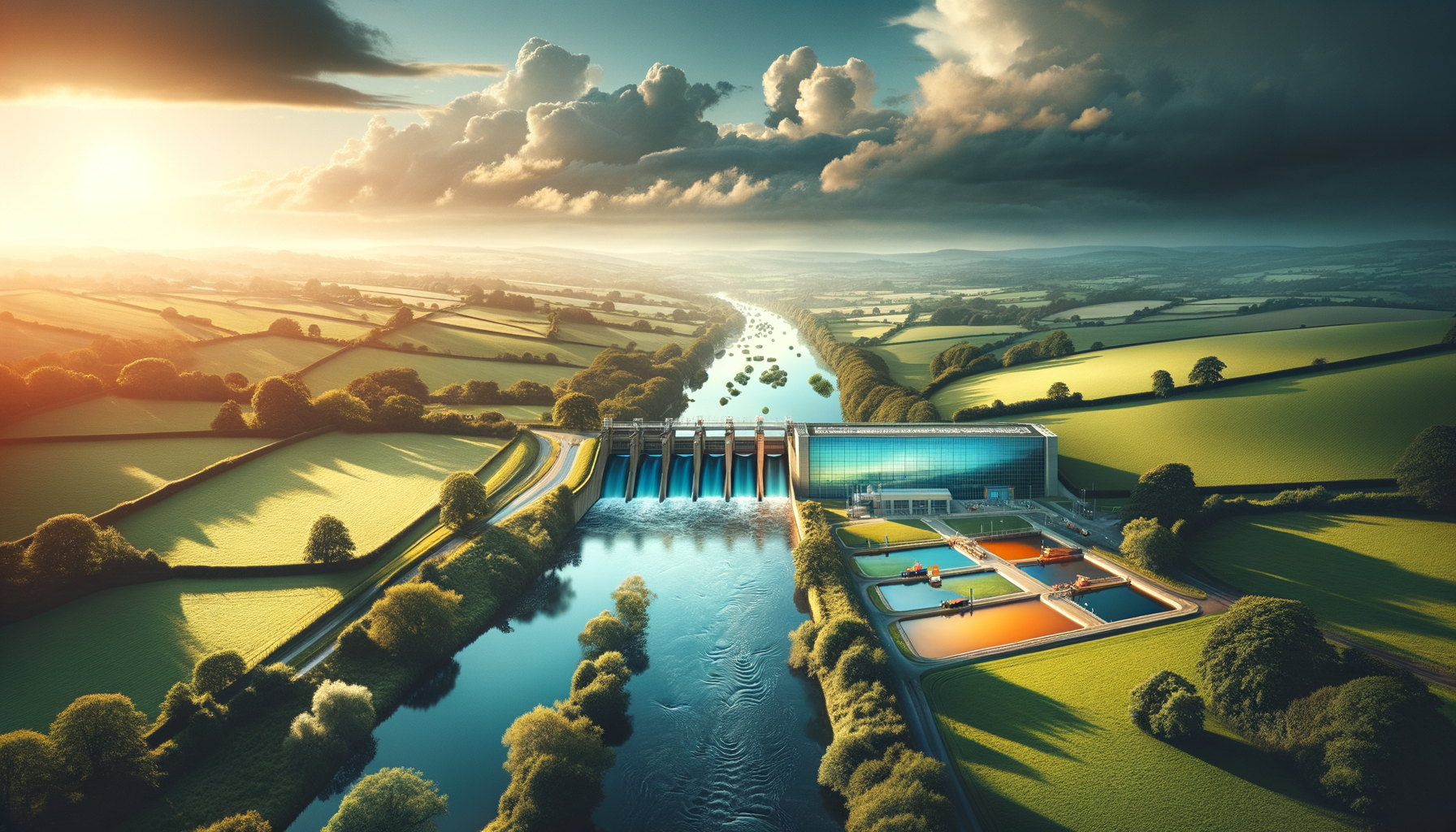
Board-level takeaway: Flood risk decisions still optimise for today’s Flood Zones. Over a 20–50 year hold, that assumption fails. “Flood Zones + climate change” is best treated as a lifecycle baseline for acquisition, capex, and design standards — not a sensitivity test.
1) What “Flood Zones + climate change” actually is (and isn’t)
England’s Flood Map for Planning Flood Zones (2 & 3) show the present-day undefended extent of land that could flood from rivers and the sea. The Flood Zones plus climate change layer shows how the combined Flood Zone 2+3 extent could expand over the next century, using Environment Agency climate change allowances and assuming no change to defences or land use.
Use it for strategic decisions (portfolio screening, masterplanning, standards).
Don’t use it to judge individual-property risk — it is not at that resolution.
2) Why boards should treat climate-expanded extents as “business as usual”
Two shifts matter at board level:
A) Flood risk becomes a time-weighted balance-sheet exposure
An asset can be compliant today and still become:
- harder to insure
- more costly to operate
- more frequently disrupted
- stranded (economically) before end-of-life
B) Compound effects are the real driver (not single hazard lines)
Even where the headline driver is sea-level rise, the mechanism often involves:
- tidal locking (reduced river outfall capacity)
- longer duration inundation
- higher groundwater levels in low-lying areas
- knock-on surface-water flooding when drainage can’t discharge
3) The portfolio signal: what changes under climate projections
The Environment Agency’s national assessment shows material increases in exposure when climate projections are applied — not just for property, but for networks.
Properties: rivers & sea (today vs climate)
![Properties at risk chart]
Infrastructure networks: all sources (today vs climate)
![Infrastructure at risk chart]
Implication: climate-adjusted flood planning is not a “site issue”. It is a portfolio exposure issue.
4) Sea level rise: the slow variable that dominates long-lived assets
UKCP18 marine projections indicate continued sea-level rise through the century, raising baseline water levels and amplifying storm surge impacts. That changes:
- coastal flooding extents
- tidally influenced river flooding (further inland)
- design water levels for outfalls, pumping stations, and critical basements
“What’s already happened” (Newlyn tide gauge; annual mean)
![Newlyn sea level trend]
This is annual mean sea level (not storm surge). Boards should read it as a structural trend that shifts the baseline for extremes.
5) A board decision framework: Defend vs Adapt vs Relocate
Flood resilience is a capital allocation decision. The goal is to avoid maladaptation: spending capex to preserve assets that are structurally mis-sited for the future climate.
![Decision framework]
How to use this:
- Defend when protection yields durable risk reduction across the asset life and doesn’t create fragile single points of failure.
- Adapt when flooding can be tolerated if the asset is designed for continuity and rapid recovery (elevate, compartmentalise, redundancy, safe shutdown).
- Relocate when exposure compounds faster than mitigation and residual risk remains unacceptable.
6) What changes immediately in acquisition, capex, and standards
Acquisition (site selection / due diligence)
- Discount value for future exposure, not historic exposure.
- Treat “Flood Zones + climate change” as a screening layer for long holds and mission-critical operations.
- Require a lifecycle flood pathway: what changes by year 10 / 25 / 50?
Capex (what to fund first)
Prioritise measures that keep value under stress:
- access continuity (roads, power, comms)
- safe shutdown and restart
- critical equipment above expected flood levels
- drainage/outfall resilience in tide-locked zones
Design standards (what “good” now means)
Move from compliance-led standards to recoverability standards:
- maximum tolerable downtime
- acceptable residual flood depth/duration
- time to restore operations
- redundancy and separation of critical systems
7) If a board pack requires GIS tooling, it won’t get used. The point of “Flood Zones + climate change” is to make lifecycle risk visible to decision-makers — quickly, clearly, and in the same place as the rest of your portfolio intelligence.
That’s why we’re building Future Floodplain (coming soon) inside FloodWatch:
- Before/after maps: Current Flood Zones vs Flood Zones + Climate Change (side-by-side / swipe compare)
- Delta metrics: baseline area, climate area, additional area affected (km² and %) for your selected geography
- Ranked exposure charts: compare counties / LPAs / river basin districts at a glance
- Board-ready exports: one-click PNG/PDF “board pack” visuals for investment, capex, and design conversations
Under the hood, Future Floodplain will use the Environment Agency’s official services:
- Flood Zones (baseline):
https://environment.data.gov.uk/spatialdata/flood-map-for-planning-flood-zones/wms - Flood Zones + climate change:
https://environment.data.gov.uk/spatialdata/flood-zones-plus-climate-change/wms
Coming soon: an easier, decision-grade way to plan for what will be true over a 20–50 year hold — not just what’s true on today’s map.
Appendix: data files included in this pack
data/ea_portfolio_climate_shift.csv(values used in portfolio charts)data/psmsl_newlyn_annual_mean_sea_level_mm.csv(annual mean sea level series)
Free Assessment
How Flood-Ready Is Your Portfolio?
10 questions. 2 minutes. Get a personalised Flood Risk Readiness Score.
Join the Early Access Programme

